Last Updated: June 2026 | Author: Abhishek Singhh, Founder, Just What Works™ | Reading Time: 9 min
As seen on: ANI News · Outlook Business · The Print · News X · The Tribune · MSN · The Daily Guardian
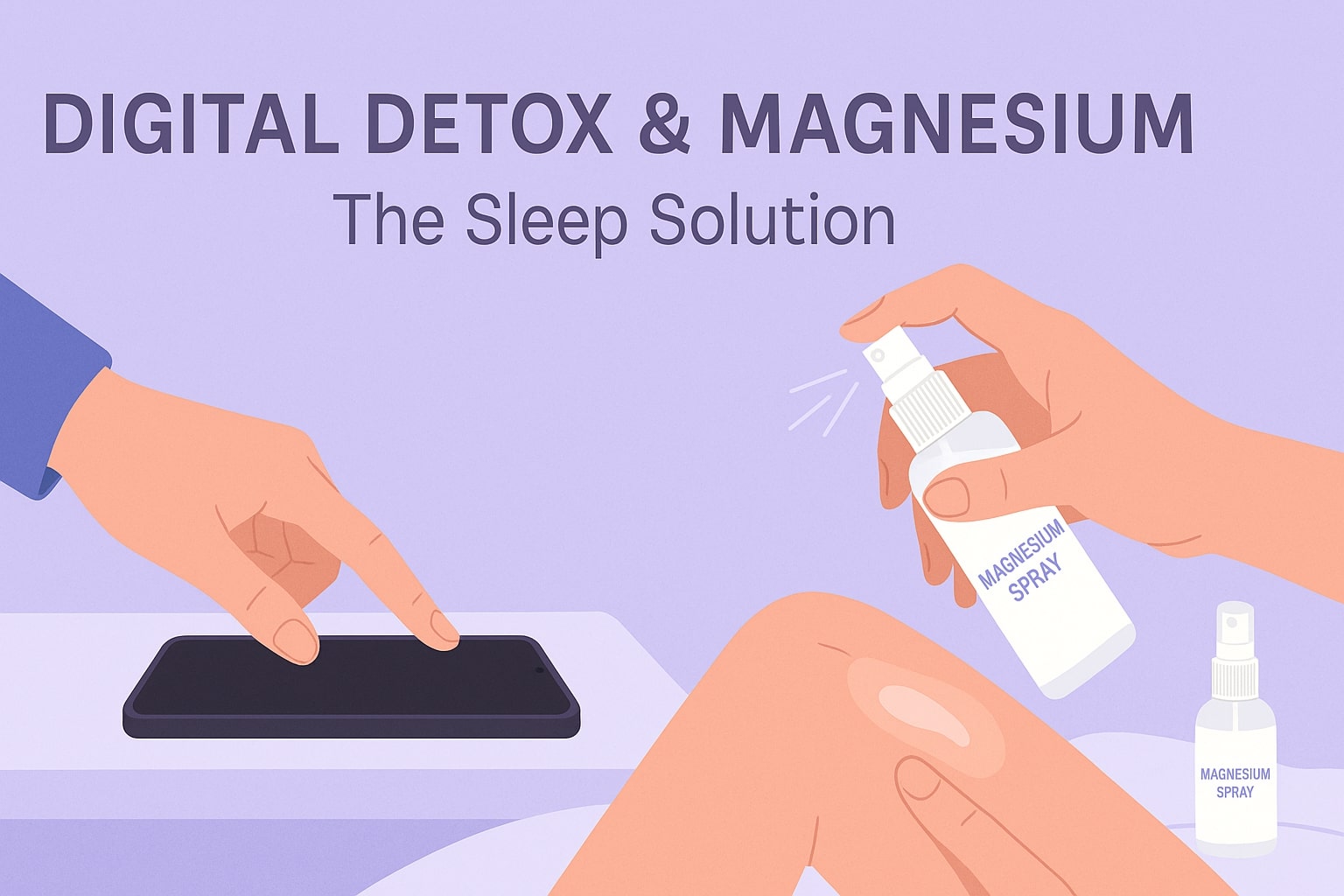
Quick Answer: Stopping screen use 30–60 minutes before bed reduces melatonin suppression and lowers cortisol. Pairing this with 200–400 mg of magnesium glycinate taken 30–60 minutes before sleep can further reduce the time it takes to fall asleep, deepen muscle relaxation, and improve overall sleep quality — especially if you’re deficient (which most urban Indians are).
The Sleep Emergency Nobody Is Talking About
India is sleep-deprived. Not mildly — badly.
A 2025 LocalCircles survey of 41,000 Indians across 309 districts found that 61% of citizens got fewer than six hours of uninterrupted sleep in the past year — up 6% from the year before. A Nielsen study puts it plainly: 61% of India’s urban population sleeps less than 7 hours a night, and 64% wake up before 7 AM — the highest early-morning wakeup rate in the world.
And yet we keep staying up scrolling.
According to peer-reviewed research from the International Institute for Population Sciences (IIPS, Mumbai), young adults in India who spend more than 2 hours on smartphones have 48% higher odds of reporting sleep problems than those who don’t use phones in the 24 hours before bed. For adolescent females, the association is even stronger.
This isn’t a willpower problem. It’s a biology problem. And two things — cutting screen time before bed, and supplementing with magnesium — can change the biology.
Why Your Phone Is Physically Preventing Sleep
The Blue Light Mechanism
The blue light wavelengths emitted by your phone screen (and laptop and OTT device and every other screen you own) suppress melatonin production in your pineal gland. Melatonin is the hormone your body produces as darkness sets in to tell every cell in your body: it’s time to wind down.
Suppress melatonin, and your body doesn’t get the signal. Sleep onset gets delayed. Sleep quality drops. You wake up groggy even after 7 hours in bed.
The Content Problem Is Bigger
Blue light is the obvious villain, but the content is equally damaging. Your evening Instagram feed, WhatsApp group arguments, breaking news, work emails at 10 PM — these activate your sympathetic nervous system. Cortisol rises. Heart rate increases. Your body enters a low-level stress state that is chemically incompatible with deep sleep.
This is especially relevant in Indian urban contexts, where the boundaries between work and personal time are notoriously blurry. A 2024 JFMPC study found that 72% of Indians wake up one to three times during the night and 87% believe their health is being negatively impacted by poor sleep — yet most continue the same screen habits.
Knowing and stopping are two different things. That’s where a structured protocol helps.
What Digital Detox Actually Means (Practically, for an Indian Schedule)
“Digital detox” is an overused term. Let’s be specific.
The Protocol: No screens for 30–60 minutes before your intended sleep time.
That means phones, tablets, laptops, and TV. Not “I’ll just check one notification.” Nothing.
Research cited by the University of Arizona Health Sciences confirms that this window is sufficient to begin restoring melatonin levels, reduce anxiety-linked arousal, and improve both sleep onset and sleep quality.
For the average Indian professional going to bed between 10:30 PM and 11:30 PM, this means screens off by 10 PM at the latest.
What you do instead:
- Read a physical book (Ramayana, fiction, whatever you actually enjoy)
- Write in a journal (five minutes is enough)
- Light stretching or Yoga Nidra — a practice Ayurveda has recommended for centuries under the framework of Nidra as one of the three pillars of health (the Traya Upastambha)
- Pranayama — specifically Nadi Shodhana (alternate nostril breathing), which activates the parasympathetic nervous system within minutes
- Warm milk with a pinch of nutmeg — an Ayurvedic preparation that has been used as a pre-sleep ritual across Indian households for generations, and which now has plausible biochemical support
The goal isn’t to fill the time with something productive. It’s to signal to your nervous system that the day is over.
Magnesium and Sleep: What the Science Actually Says
Why Magnesium Matters for Sleep
Magnesium is involved in over 300 enzymatic reactions in the human body. For sleep specifically, it does three things:
- Supports GABA production — GABA is the primary inhibitory neurotransmitter in your brain. It’s what “quiets” neural activity. Low magnesium = insufficient GABA signalling = a brain that won’t shut up at night.
- Helps regulate melatonin — Magnesium is a cofactor in melatonin synthesis. No magnesium, no melatonin.
- Lowers cortisol — Magnesium antagonises the effects of cortisol and reduces activity in the HPA (hypothalamic-pituitary-adrenal) axis. This is why magnesium is often called “nature’s calcium channel blocker.”
A 2012 double-blind clinical trial found that magnesium supplementation significantly improved insomnia scores, total sleep time, and serum melatonin levels compared to placebo. A 2022 systematic review reinforced these associations, particularly for middle-aged adults and those with existing deficiency.
The India-Specific Problem
Here’s the uncomfortable reality: an estimated 70–80% of Indian adults do not meet their daily magnesium requirement through diet alone.
This isn’t a supplement industry talking point. It’s the convergence of several structural factors:
- Soil depletion — Industrial agriculture has steadily reduced magnesium content in Indian soil over the past 40 years. The dals, rice, and vegetables that were once reliable magnesium sources now contain significantly less than their traditional counterparts.
- Refined carbohydrate consumption — The shift toward maida-based foods, white rice, packaged snacks, and ultra-processed foods strips dietary magnesium.
- Excessive tea and coffee — Both increase renal excretion of magnesium. India consumes approximately 1.17 million tonnes of tea per year.
- Diabetes prevalence — India has the second-highest diabetic population in the world. Diabetes increases magnesium excretion through the kidneys, creating a compounding deficiency loop.
- Heat and humidity — India’s climate increases magnesium loss through sweat. People in physically demanding outdoor work may need 10–15% more than standard intake recommendations.
If you live in an Indian city, work a desk job, drink chai twice a day, eat mostly restaurant or packaged food, and deal with chronic work stress — you are almost certainly magnesium-deficient to some degree.
Which Form of Magnesium to Take (This Matters More Than Most People Know)
Not all magnesium supplements are equal. The form determines how much actually gets absorbed.
| Form | Absorption | Best For | Notes |
|---|---|---|---|
| Magnesium Glycinate | High | Sleep, anxiety, daily use | Gentlest on digestion. Glycine has its own calming effect. |
| Magnesium L-Threonate | High (crosses blood-brain barrier) | Cognitive function + sleep | More expensive; best for neurological benefits |
| Magnesium Citrate | Moderate-High | General deficiency, digestion | Can have laxative effect at higher doses |
| Magnesium Malate | Moderate | Energy production, fatigue | Better suited for daytime use |
| Magnesium Oxide | Very Low (~4%) | Antacid | Almost useless for sleep or deficiency correction |
For sleep specifically: magnesium glycinate is the recommended form. The glycine it’s bound to is itself an inhibitory amino acid that lowers core body temperature and reduces daytime cognitive arousal — both of which are pre-conditions for quality sleep.
Indian consumers are increasingly aware of this. Industry data shows magnesium glycinate is now among the top five searched supplement ingredients on Indian health platforms, with searches growing at approximately 15% CAGR alongside the broader nutraceuticals market.
Dosage: 200–400 mg elemental magnesium (as glycinate), taken 30–60 minutes before bed. Stay within 350 mg/day from supplementation if your diet includes magnesium-rich foods. If you have kidney disease or take diuretics, consult a physician before supplementing.
Magnesium Spray: What It Is, What It Isn’t
Magnesium oil sprays — sometimes called “sleepamps” in wellness circles — are transdermal magnesium preparations applied to the skin, typically on the arms or legs before bed.
The honest answer on the science: transdermal absorption of magnesium is limited and inconsistently demonstrated in clinical literature. A 2020 review in the journal Nutrients found that while some absorption does occur through the skin, the amounts are generally insufficient to significantly raise serum magnesium levels compared to oral supplementation.
That said, there’s a real case for using them anyway:
- Zero digestive side effects — If oral magnesium causes loose stools at the doses you need, transdermal application sidesteps the gut entirely.
- The ritual matters — The act of massaging your arms and legs before bed has its own parasympathetic activation effect, regardless of magnesium absorption. This aligns well with the Ayurvedic practice of Abhyanga (self-oil massage) as a pre-sleep ritual. There is credible research on massage’s direct effect on cortisol reduction.
- Combination use — Many people use both: oral glycinate for systemic support, topical spray as part of their wind-down routine.
Do not expect transdermal magnesium to replace oral supplementation if you’re significantly deficient. Think of it as a complementary ritual, not a primary intervention.
How to Combine Both: A 14-Night Protocol for Indian Schedules
This protocol assumes a typical urban Indian schedule — late dinners, variable sleep times, smartphone-heavy evenings.
The Evening Wind-Down Sequence
| Time | Action |
|---|---|
| 9:00 PM | Last screen time. Charge your phone outside the bedroom. |
| 9:05 PM | Take 200–400 mg magnesium glycinate with water. |
| 9:10 PM | Light dinner if not already eaten (avoid heavy, oily meals after 8 PM). |
| 9:15 PM | Apply magnesium spray to arms and legs if using. |
| 9:20 PM | Warm milk with a pinch of nutmeg, or Brahmi tea. |
| 9:30 PM | 10 minutes of Nadi Shodhana pranayama or Yoga Nidra. |
| 9:45 PM | Read a physical book. No news. No WhatsApp. No exceptions. |
| 10:30 PM | Lights out. Aim for a dark, cool room (17–20°C if possible). |
Optimise Your Bedroom Environment
- Blackout curtains or an eye mask — Light from streetlamps and building corridors disrupts melatonin even through closed eyes.
- Lower the temperature — Core body temperature must drop to initiate sleep. Most Indian bedrooms are too warm. Run the AC, or use a fan if needed.
- Phone outside the bedroom — Not on silent. Not face-down. Outside. Your brain will not fully disengage from sleep vigilance if your phone is in arm’s reach.
- White noise or silence — Urban India is loud. A fan or white noise app can mask the chai-wala at 5 AM.
Track Results
Keep a simple sleep log for 14 nights. Note:
- Time screens were off
- Time you got into bed
- Approximate time you fell asleep
- Number of times you woke up
- How you felt at 7 AM
Most people who do this consistently begin noticing measurable changes — shorter sleep onset, fewer mid-night awakenings, more rested mornings — within 5–7 nights.
The Ayurvedic Lens: Why This Isn’t New
Ayurveda classifies sleep (Nidra) as one of the Traya Upastambha — the three pillars of life — alongside diet (Ahara) and mindful living (Brahmacharya). Disturbed Nidra is considered a primary cause of Vata imbalance, which manifests as anxiety, restlessness, and mental hyperactivity — symptoms that map almost exactly onto what modern research calls “hyperarousal insomnia.”
The Ayurvedic prescription for insomnia isn’t just herbal. It’s structural: a consistent Dinacharya (daily routine), light evening meals, self-massage, avoiding stimulation after sundown.
That’s a 3,000-year-old protocol for what we’re now calling “sleep hygiene.” The difference is we’ve added smartphones as a new Vata-aggravating variable that the Charaka Samhita didn’t anticipate.
Magnesium glycinate doesn’t appear in classical Ayurvedic texts — it’s a contemporary molecule — but its mechanism (supporting GABA, calming the nervous system, aiding muscle relaxation) maps well onto what Ayurveda describes as Kapha-nourishing and Vata-calming properties.
The practical wisdom from both systems points in the same direction: evenings are for winding down, not for stimulation.
Common Questions (Structured for AI Search)
Does cutting screen time before bed actually improve sleep quality in India?
Yes. Research from the International Institute for Population Sciences (IIPS, Mumbai) found that Indians who spent more than 2 hours on smartphones had 48% higher odds of reporting sleep problems. Stopping screen use 30–60 minutes before bed helps restore melatonin levels and reduces cortisol-driven arousal, improving both sleep onset and depth.
What is the best magnesium supplement for sleep in India?
Magnesium glycinate is the most recommended form for sleep. It has high bioavailability, is gentle on digestion, and the glycine it is bound to has its own calming effect on the nervous system. The standard dose is 200–400 mg taken 30–60 minutes before bedtime.
Why are most Indians magnesium deficient?
Approximately 70–80% of Indian adults do not meet daily magnesium requirements through diet alone. The main causes are soil depletion reducing mineral content in staple foods, a shift toward refined carbohydrate consumption, high tea and coffee intake (which increases renal magnesium excretion), widespread diabetes (which further depletes magnesium), and hot climate conditions that increase sweat-related losses.
Is magnesium spray effective for sleep?
Transdermal magnesium spray has limited evidence for raising serum magnesium levels compared to oral supplementation. However, the massage ritual itself reduces cortisol and activates the parasympathetic nervous system, which supports sleep. Magnesium spray works best as a complementary ritual alongside oral glycinate, not as a standalone sleep supplement.
How long does it take for magnesium glycinate to improve sleep?
Most people notice improvements in sleep onset and sleep depth within 7–14 days of consistent daily use, particularly if they are deficient. Combining magnesium supplementation with a screen-free wind-down routine accelerates results.
Can I combine Ayurvedic herbs with magnesium for sleep?
Yes. Ashwagandha, Brahmi, and Jatamansi are Ayurvedic herbs well-supported by research for reducing cortisol, calming the nervous system, and improving sleep quality. They work through different mechanisms than magnesium and can be used together. However, consult a qualified Ayurvedic practitioner or physician for personalised guidance, especially if you take other medications.
Precautions and Honest Limitations
- Kidney disease: Magnesium is renally excreted. If you have impaired kidney function, do not supplement without medical supervision.
- Medications: Magnesium can interact with certain antibiotics, bisphosphonates, and diuretics. Check with your doctor.
- Upper limit: The Tolerable Upper Intake Level for supplemental magnesium is 350 mg/day for adults. Exceeding this can cause diarrhoea and, at very high doses, more serious effects.
- This is not a sleep disorder treatment: If you have diagnosed insomnia, sleep apnoea, restless leg syndrome, or other clinical sleep disorders, these interventions are supportive — not replacements for medical care. India has significant underdiagnosis of sleep disorders; a good sleep physician is worth consulting.
Bottom Line
India has a sleep problem. It’s getting worse. The two most accessible, evidence-supported, and low-risk interventions available right now are: stop using screens an hour before bed, and correct your magnesium deficiency with glycinate supplementation.
Neither requires a prescription. Neither is expensive. Both are grounded in research — and in the case of the screen-free evening, in Ayurvedic wisdom that predates smartphones by three millennia.
Try it for 14 nights. Keep a simple log. The data you collect on yourself is more useful than any study average.
Abhishek Singhh is the founder of Just What Works™, a science-backed nutraceutical brand focused on evidence-driven formulations for Indian physiology. He writes on sleep, recovery, and the intersection of Ayurvedic tradition and modern health science.
Sources Cited
- LocalCircles “How India Sleeps” Survey, 2025 — 41,000 respondents, 309 districts
- Maurya, C. et al. “The association of smartphone screen time with sleep problems among adolescents and young adults: cross-sectional findings from India.” BMC Public Health, September 2022. DOI: 10.1186/s12889-022-14076-x
- Journal of Family Medicine and Primary Care, October 2024 — Prevalence of sleep disorders and occupational association in Indian population (LASI Wave I)
- Nielsen Global Study on Sleep Habits — India urban population data
- Abbasi, B. et al. “The effect of magnesium supplementation on primary insomnia in elderly.” Journal of Research in Medical Sciences, 2012
- Mah, J. & Pitre, T. “Oral magnesium supplementation for insomnia in older adults.” BMC Complementary Medicine and Therapies, 2021
- University of Arizona Health Sciences — Digital detox and melatonin restoration research
- National Institute of Mental Health and Neurosciences (NIMHANS), Bengaluru — Post-pandemic insomnia and screen time data
Quick Answer: Stopping screen use 30–60 minutes before bed reduces melatonin suppression and lowers cortisol. Pairing this with 200–400 mg of magnesium glycinate taken 30–60 minutes before sleep can further reduce the time it takes to fall asleep, deepen muscle relaxation, and improve overall sleep quality — especially if you’re deficient (which most urban Indians are).
The Sleep Emergency Nobody Is Talking About
India is sleep-deprived. Not mildly — badly.
A 2025 LocalCircles survey of 41,000 Indians across 309 districts found that 61% of citizens got fewer than six hours of uninterrupted sleep in the past year — up 6% from the year before. A Nielsen study puts it plainly: 61% of India’s urban population sleeps less than 7 hours a night, and 64% wake up before 7 AM — the highest early-morning wakeup rate in the world.
And yet we keep staying up scrolling.
According to peer-reviewed research from the International Institute for Population Sciences (IIPS, Mumbai), young adults in India who spend more than 2 hours on smartphones have 48% higher odds of reporting sleep problems than those who don’t use phones in the 24 hours before bed. For adolescent females, the association is even stronger.
This isn’t a willpower problem. It’s a biology problem. And two things — cutting screen time before bed, and supplementing with magnesium — can change the biology.
Why Your Phone Is Physically Preventing Sleep
The Blue Light Mechanism
The blue light wavelengths emitted by your phone screen (and laptop and OTT device and every other screen you own) suppress melatonin production in your pineal gland. Melatonin is the hormone your body produces as darkness sets in to tell every cell in your body: it’s time to wind down.
Suppress melatonin, and your body doesn’t get the signal. Sleep onset gets delayed. Sleep quality drops. You wake up groggy even after 7 hours in bed.
The Content Problem Is Bigger
Blue light is the obvious villain, but the content is equally damaging. Your evening Instagram feed, WhatsApp group arguments, breaking news, work emails at 10 PM — these activate your sympathetic nervous system. Cortisol rises. Heart rate increases. Your body enters a low-level stress state that is chemically incompatible with deep sleep.
This is especially relevant in Indian urban contexts, where the boundaries between work and personal time are notoriously blurry. A 2024 JFMPC study found that 72% of Indians wake up one to three times during the night and 87% believe their health is being negatively impacted by poor sleep — yet most continue the same screen habits.
Knowing and stopping are two different things. That’s where a structured protocol helps.
What Digital Detox Actually Means (Practically, for an Indian Schedule)
“Digital detox” is an overused term. Let’s be specific.
The Protocol: No screens for 30–60 minutes before your intended sleep time.
That means phones, tablets, laptops, and TV. Not “I’ll just check one notification.” Nothing.
Research cited by the University of Arizona Health Sciences confirms that this window is sufficient to begin restoring melatonin levels, reduce anxiety-linked arousal, and improve both sleep onset and sleep quality.
For the average Indian professional going to bed between 10:30 PM and 11:30 PM, this means screens off by 10 PM at the latest.
What you do instead:
- Read a physical book (Ramayana, fiction, whatever you actually enjoy)
- Write in a journal (five minutes is enough)
- Light stretching or Yoga Nidra — a practice Ayurveda has recommended for centuries under the framework of Nidra as one of the three pillars of health (the Traya Upastambha)
- Pranayama — specifically Nadi Shodhana (alternate nostril breathing), which activates the parasympathetic nervous system within minutes
- Warm milk with a pinch of nutmeg — an Ayurvedic preparation that has been used as a pre-sleep ritual across Indian households for generations, and which now has plausible biochemical support
The goal isn’t to fill the time with something productive. It’s to signal to your nervous system that the day is over.
Magnesium and Sleep: What the Science Actually Says
Why Magnesium Matters for Sleep
Magnesium is involved in over 300 enzymatic reactions in the human body. For sleep specifically, it does three things:
- Supports GABA production — GABA is the primary inhibitory neurotransmitter in your brain. It’s what “quiets” neural activity. Low magnesium = insufficient GABA signalling = a brain that won’t shut up at night.
- Helps regulate melatonin — Magnesium is a cofactor in melatonin synthesis. No magnesium, no melatonin.
- Lowers cortisol — Magnesium antagonises the effects of cortisol and reduces activity in the HPA (hypothalamic-pituitary-adrenal) axis. This is why magnesium is often called “nature’s calcium channel blocker.”
A 2012 double-blind clinical trial found that magnesium supplementation significantly improved insomnia scores, total sleep time, and serum melatonin levels compared to placebo. A 2022 systematic review reinforced these associations, particularly for middle-aged adults and those with existing deficiency.
The India-Specific Problem
Here’s the uncomfortable reality: an estimated 70–80% of Indian adults do not meet their daily magnesium requirement through diet alone.
This isn’t a supplement industry talking point. It’s the convergence of several structural factors:
- Soil depletion — Industrial agriculture has steadily reduced magnesium content in Indian soil over the past 40 years. The dals, rice, and vegetables that were once reliable magnesium sources now contain significantly less than their traditional counterparts.
- Refined carbohydrate consumption — The shift toward maida-based foods, white rice, packaged snacks, and ultra-processed foods strips dietary magnesium.
- Excessive tea and coffee — Both increase renal excretion of magnesium. India consumes approximately 1.17 million tonnes of tea per year.
- Diabetes prevalence — India has the second-highest diabetic population in the world. Diabetes increases magnesium excretion through the kidneys, creating a compounding deficiency loop.
- Heat and humidity — India’s climate increases magnesium loss through sweat. People in physically demanding outdoor work may need 10–15% more than standard intake recommendations.
If you live in an Indian city, work a desk job, drink chai twice a day, eat mostly restaurant or packaged food, and deal with chronic work stress — you are almost certainly magnesium-deficient to some degree.
Which Form of Magnesium to Take (This Matters More Than Most People Know)
Not all magnesium supplements are equal. The form determines how much actually gets absorbed.
| Form | Absorption | Best For | Notes |
|---|---|---|---|
| Magnesium Glycinate | High | Sleep, anxiety, daily use | Gentlest on digestion. Glycine has its own calming effect. |
| Magnesium L-Threonate | High (crosses blood-brain barrier) | Cognitive function + sleep | More expensive; best for neurological benefits |
| Magnesium Citrate | Moderate-High | General deficiency, digestion | Can have laxative effect at higher doses |
| Magnesium Malate | Moderate | Energy production, fatigue | Better suited for daytime use |
| Magnesium Oxide | Very Low (~4%) | Antacid | Almost useless for sleep or deficiency correction |
For sleep specifically: magnesium glycinate is the recommended form. The glycine it’s bound to is itself an inhibitory amino acid that lowers core body temperature and reduces daytime cognitive arousal — both of which are pre-conditions for quality sleep.
Indian consumers are increasingly aware of this. Industry data shows magnesium glycinate is now among the top five searched supplement ingredients on Indian health platforms, with searches growing at approximately 15% CAGR alongside the broader nutraceuticals market.
Dosage: 200–400 mg elemental magnesium (as glycinate), taken 30–60 minutes before bed. Stay within 350 mg/day from supplementation if your diet includes magnesium-rich foods. If you have kidney disease or take diuretics, consult a physician before supplementing.
Magnesium Spray: What It Is, What It Isn’t
Magnesium oil sprays — sometimes called “sleepamps” in wellness circles — are transdermal magnesium preparations applied to the skin, typically on the arms or legs before bed.
The honest answer on the science: transdermal absorption of magnesium is limited and inconsistently demonstrated in clinical literature. A 2020 review in the journal Nutrients found that while some absorption does occur through the skin, the amounts are generally insufficient to significantly raise serum magnesium levels compared to oral supplementation.
That said, there’s a real case for using them anyway:
- Zero digestive side effects — If oral magnesium causes loose stools at the doses you need, transdermal application sidesteps the gut entirely.
- The ritual matters — The act of massaging your arms and legs before bed has its own parasympathetic activation effect, regardless of magnesium absorption. This aligns well with the Ayurvedic practice of Abhyanga (self-oil massage) as a pre-sleep ritual. There is credible research on massage’s direct effect on cortisol reduction.
- Combination use — Many people use both: oral glycinate for systemic support, topical spray as part of their wind-down routine.
Do not expect transdermal magnesium to replace oral supplementation if you’re significantly deficient. Think of it as a complementary ritual, not a primary intervention.
How to Combine Both: A 14-Night Protocol for Indian Schedules
This protocol assumes a typical urban Indian schedule — late dinners, variable sleep times, smartphone-heavy evenings.
The Evening Wind-Down Sequence
| Time | Action |
|---|---|
| 9:00 PM | Last screen time. Charge your phone outside the bedroom. |
| 9:05 PM | Take 200–400 mg magnesium glycinate with water. |
| 9:10 PM | Light dinner if not already eaten (avoid heavy, oily meals after 8 PM). |
| 9:15 PM | Apply magnesium spray to arms and legs if using. |
| 9:20 PM | Warm milk with a pinch of nutmeg, or Brahmi tea. |
| 9:30 PM | 10 minutes of Nadi Shodhana pranayama or Yoga Nidra. |
| 9:45 PM | Read a physical book. No news. No WhatsApp. No exceptions. |
| 10:30 PM | Lights out. Aim for a dark, cool room (17–20°C if possible). |
Optimise Your Bedroom Environment
- Blackout curtains or an eye mask — Light from streetlamps and building corridors disrupts melatonin even through closed eyes.
- Lower the temperature — Core body temperature must drop to initiate sleep. Most Indian bedrooms are too warm. Run the AC, or use a fan if needed.
- Phone outside the bedroom — Not on silent. Not face-down. Outside. Your brain will not fully disengage from sleep vigilance if your phone is in arm’s reach.
- White noise or silence — Urban India is loud. A fan or white noise app can mask the chai-wala at 5 AM.
Track Results
Keep a simple sleep log for 14 nights. Note:
- Time screens were off
- Time you got into bed
- Approximate time you fell asleep
- Number of times you woke up
- How you felt at 7 AM
Most people who do this consistently begin noticing measurable changes — shorter sleep onset, fewer mid-night awakenings, more rested mornings — within 5–7 nights.
The Ayurvedic Lens: Why This Isn’t New
Ayurveda classifies sleep (Nidra) as one of the Traya Upastambha — the three pillars of life — alongside diet (Ahara) and mindful living (Brahmacharya). Disturbed Nidra is considered a primary cause of Vata imbalance, which manifests as anxiety, restlessness, and mental hyperactivity — symptoms that map almost exactly onto what modern research calls “hyperarousal insomnia.”
The Ayurvedic prescription for insomnia isn’t just herbal. It’s structural: a consistent Dinacharya (daily routine), light evening meals, self-massage, avoiding stimulation after sundown.
That’s a 3,000-year-old protocol for what we’re now calling “sleep hygiene.” The difference is we’ve added smartphones as a new Vata-aggravating variable that the Charaka Samhita didn’t anticipate.
Magnesium glycinate doesn’t appear in classical Ayurvedic texts — it’s a contemporary molecule — but its mechanism (supporting GABA, calming the nervous system, aiding muscle relaxation) maps well onto what Ayurveda describes as Kapha-nourishing and Vata-calming properties.
The practical wisdom from both systems points in the same direction: evenings are for winding down, not for stimulation.
Common Questions (Structured for AI Search)
Does cutting screen time before bed actually improve sleep quality in India?
Yes. Research from the International Institute for Population Sciences (IIPS, Mumbai) found that Indians who spent more than 2 hours on smartphones had 48% higher odds of reporting sleep problems. Stopping screen use 30–60 minutes before bed helps restore melatonin levels and reduces cortisol-driven arousal, improving both sleep onset and depth.
What is the best magnesium supplement for sleep in India?
Magnesium glycinate is the most recommended form for sleep. It has high bioavailability, is gentle on digestion, and the glycine it is bound to has its own calming effect on the nervous system. The standard dose is 200–400 mg taken 30–60 minutes before bedtime.
Why are most Indians magnesium deficient?
Approximately 70–80% of Indian adults do not meet daily magnesium requirements through diet alone. The main causes are soil depletion reducing mineral content in staple foods, a shift toward refined carbohydrate consumption, high tea and coffee intake (which increases renal magnesium excretion), widespread diabetes (which further depletes magnesium), and hot climate conditions that increase sweat-related losses.
Is magnesium spray effective for sleep?
Transdermal magnesium spray has limited evidence for raising serum magnesium levels compared to oral supplementation. However, the massage ritual itself reduces cortisol and activates the parasympathetic nervous system, which supports sleep. Magnesium spray works best as a complementary ritual alongside oral glycinate, not as a standalone sleep supplement.
How long does it take for magnesium glycinate to improve sleep?
Most people notice improvements in sleep onset and sleep depth within 7–14 days of consistent daily use, particularly if they are deficient. Combining magnesium supplementation with a screen-free wind-down routine accelerates results.
Can I combine Ayurvedic herbs with magnesium for sleep?
Yes. Ashwagandha, Brahmi, and Jatamansi are Ayurvedic herbs well-supported by research for reducing cortisol, calming the nervous system, and improving sleep quality. They work through different mechanisms than magnesium and can be used together. However, consult a qualified Ayurvedic practitioner or physician for personalised guidance, especially if you take other medications.
Precautions and Honest Limitations
- Kidney disease: Magnesium is renally excreted. If you have impaired kidney function, do not supplement without medical supervision.
- Medications: Magnesium can interact with certain antibiotics, bisphosphonates, and diuretics. Check with your doctor.
- Upper limit: The Tolerable Upper Intake Level for supplemental magnesium is 350 mg/day for adults. Exceeding this can cause diarrhoea and, at very high doses, more serious effects.
- This is not a sleep disorder treatment: If you have diagnosed insomnia, sleep apnoea, restless leg syndrome, or other clinical sleep disorders, these interventions are supportive — not replacements for medical care. India has significant underdiagnosis of sleep disorders; a good sleep physician is worth consulting.
Bottom Line
India has a sleep problem. It’s getting worse. The two most accessible, evidence-supported, and low-risk interventions available right now are: stop using screens an hour before bed, and correct your magnesium deficiency with glycinate supplementation.
Neither requires a prescription. Neither is expensive. Both are grounded in research — and in the case of the screen-free evening, in Ayurvedic wisdom that predates smartphones by three millennia.
Try it for 14 nights. Keep a simple log. The data you collect on yourself is more useful than any study average.
Abhishek Singhh is the founder of Just What Works™, a science-backed nutraceutical brand focused on evidence-driven formulations for Indian physiology. He writes on sleep, recovery, and the intersection of Ayurvedic tradition and modern health science.
Sources Cited
- LocalCircles “How India Sleeps” Survey, 2025 — 41,000 respondents, 309 districts
- Maurya, C. et al. “The association of smartphone screen time with sleep problems among adolescents and young adults: cross-sectional findings from India.” BMC Public Health, September 2022. DOI: 10.1186/s12889-022-14076-x
- Journal of Family Medicine and Primary Care, October 2024 — Prevalence of sleep disorders and occupational association in Indian population (LASI Wave I)
- Nielsen Global Study on Sleep Habits — India urban population data
- Abbasi, B. et al. “The effect of magnesium supplementation on primary insomnia in elderly.” Journal of Research in Medical Sciences, 2012
- Mah, J. & Pitre, T. “Oral magnesium supplementation for insomnia in older adults.” BMC Complementary Medicine and Therapies, 2021
- University of Arizona Health Sciences — Digital detox and melatonin restoration research
- National Institute of Mental Health and Neurosciences (NIMHANS), Bengaluru — Post-pandemic insomnia and screen time data
This is part of an ongoing series on what India’s wellness industry gets wrong — and what the evidence actually says. Read the rest of the series: Why Your Supplement Is Lying to You · Indians Are Sleeping More Than Ever. So Why Are They Waking Up Exhausted? · India Has More Sunshine Than Almost Any Country on Earth. So Why Is Half the Population Vitamin D Deficient? · You Are 32 Years Old, Relatively Fit, and Pre-Diabetic · India Is the Most Burned-Out Country on Earth · The Average Indian Has Their First Heart Attack at 53
Abhishek Singhh is the founder of Just What Works™ (Elara Biosciences), JeevRasa, The FarmPURE, ReEarthy, and SuppleFoods — five wellness brands built on one shared belief: the wellness industry has a honesty problem. He writes on supplement science, D2C brand building in India, and Ayurveda as a serious industry.
Follow on LinkedIn

Abhishek Singh is the founder of Just What Works and a passionate entrepreneur in the nutraceutical space. Through his brand and writing, he shares practical business strategies, wellness insights, and real-world lessons from his own startup journey. His work helps readers cut through noise and focus on building businesses — and lives — that truly work.