By Abhishek Singhh | Published on abhishekschauhan.com
As seen on: ANI News · The Tribune · News X · Outlook Business · The Print · MSN · The Daily Guardian
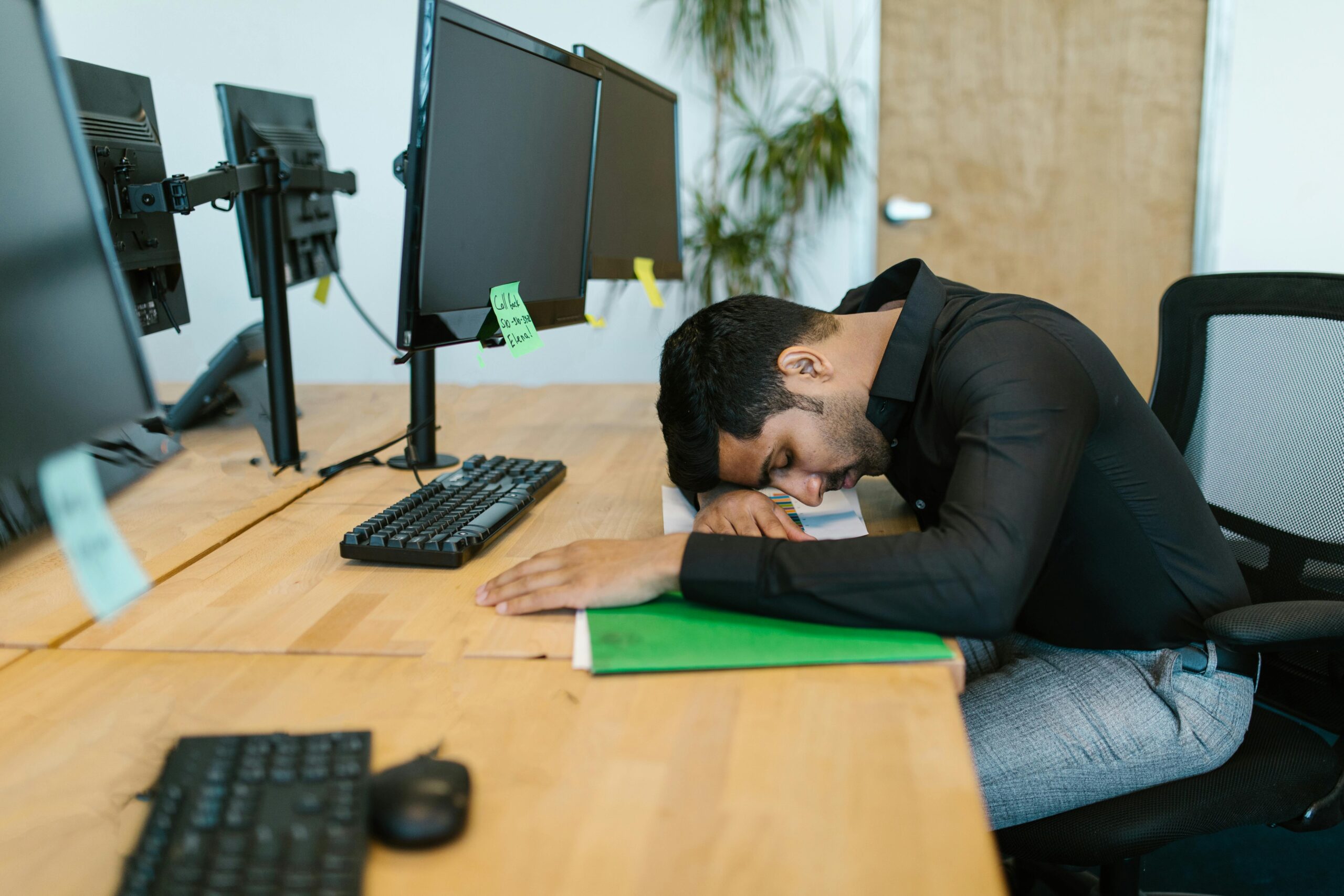
The alarm goes off. You hit snooze. You slept seven hours — maybe eight. You still feel like you didn’t sleep at all.
This isn’t a sleep duration problem. India has one of those too, but this is different.
This is a recovery problem. And it’s getting worse while the wellness industry sells you melatonin gummies.
The Data Nobody Wants to Talk About
A 2026 LocalCircles survey of over 43,000 Indians across 348 districts found that 61% reported getting fewer than six hours of uninterrupted sleep per night — up from 50% in 2022. The Wakefit Great Indian Sleep Scorecard 2025 found that 55% of Indians now sleep after midnight. Nearly one in three suspects they may have insomnia but has never consulted a doctor. And 59% reported daytime sleepiness severe enough to affect work performance.
These numbers are alarming. But they only tell half the story.
The missing half is this: sleep duration and sleep quality are not the same thing. Spending eight hours in bed and spending eight hours in restorative sleep are biologically different events. And right now, millions of Indian professionals are experiencing the first while believing they’re getting the second.
Sleep researchers call it non-restorative sleep — sleeping through the night but waking up feeling like you didn’t. Your body was horizontal. Your nervous system was not recovering.
Why India’s Productivity Culture Created a Recovery Deficit
For the last two decades, Indian ambition ran on a simple equation: less sleep equals more output. In startup circles from Bengaluru to Gurgaon, sleeping five hours was a badge, not a warning sign.
That era is ending. Not because the ambition is gone, but because the body is pushing back.
What many professionals now call “low motivation” is frequently nervous-system exhaustion. What feels like laziness after a full night’s sleep is often poor recovery. The body doesn’t distinguish between work stress, social media stimulation, blue light exposure at 11pm, and a genuine physical threat. All of it activates the same stress response. All of it taxes the same recovery systems.
Cortisol — the primary stress hormone — follows a natural daily rhythm. It should be highest in the morning (which wakes you up) and lowest at night (which allows deep sleep). In chronically overstimulated nervous systems, that rhythm flattens. Cortisol stays elevated at night. Sleep happens. Recovery doesn’t.
This is not a mindset problem. It is a biology problem.
The Recovery Gap the Supplement Industry Ignores
Here is where I want to be direct — because I formulate supplements and I’ve watched this industry respond to India’s recovery crisis with products that address the symptom, not the mechanism.
The sleep supplement market in India has exploded. Melatonin. Ashwagandha. Magnesium. “Sleep blends” with 12 ingredients on the label. Products positioned as recovery aids that are, in practice, designed to help you fall asleep faster — not to improve the quality of recovery that happens during sleep.
Falling asleep and recovering during sleep are different biological processes. You can solve one without touching the other.
Melatonin tells your body it’s dark outside. It helps regulate sleep onset timing. It does not improve deep sleep architecture. It does not reduce cortisol. It does not support the cellular repair processes that make sleep restorative.
Magnesium — if it’s the right form, at the right dose — genuinely supports nervous system regulation and deep sleep quality. But most magnesium supplements sold in India use magnesium oxide, which has roughly 4% bioavailability. Your body absorbs almost none of it. The label says magnesium. The biology says you’ve spent ₹600 on something your gut mostly ignored.
Ashwagandha at a clinically studied dose (300–600mg of KSH-66 standardised extract) has solid evidence for cortisol reduction and stress resilience. Ashwagandha at 150mg of unstandardised root powder — which is what most products contain — has a label claim and not much else.
The Indian wellness industry’s response to the recovery crisis has largely been to repackage existing ingredients under “sleep” positioning without fixing the formulation fundamentals. Consumers buy the product, sleep the same way, and conclude that supplements don’t work.
The supplements didn’t fail. The formulations did.
What Recovery Actually Requires
Recovery is not one thing. It’s a cascade of processes that happen during sleep when the conditions are right.
The nervous system needs to shift from sympathetic (alert, reactive) to parasympathetic (calm, restorative) dominance. This is where most people fail — the stimulation from screens, late-night work, and even passive scrolling keeps the sympathetic nervous system active well past bedtime.
Deep sleep (slow-wave sleep) is where physical repair happens — muscle tissue, immune function, growth hormone release. REM sleep is where cognitive processing and emotional regulation occur. Both require specific neurochemical conditions. Both are disrupted by elevated cortisol, poor magnesium status, and inconsistent sleep timing.
What actually moves the needle on recovery quality:
Nervous system regulation before sleep. Not meditation as a concept — but a genuine 30–45 minute wind-down period with reduced light and stimulation. This is not optional biology. It’s the prerequisite for everything else.
Magnesium status. Magnesium is a cofactor in over 300 enzymatic reactions, including those that regulate the nervous system and sleep. India has high rates of dietary magnesium deficiency. Supplementing with the right form — glycinate or L-threonate — and at a meaningful dose (200–400mg elemental) makes a measurable difference in sleep quality for deficient individuals.
Cortisol rhythm. This is the one nobody addresses. If cortisol is dysregulated, no sleep supplement fixes the downstream symptoms. This is where adaptogenic herbs like ashwagandha (properly standardised and dosed) actually have a role — not as a sleep aid, but as a cortisol modulator that improves the conditions for recovery.
Consistency over intervention. The body recovers better on a consistent sleep schedule than on a variable schedule supplemented with sleep aids. This is the least monetisable advice in wellness, which is why you rarely see it prominently featured.
The Honest Conversation India Needs to Have
My article on India’s sleep recovery crisis — published last month and covered by ANI News, The Tribune, The Print, MSN, and outlets across 160 platforms — argued that India’s growing wellness crisis is no longer just about sleep deprivation. It is about recovery deprivation.
The response confirmed that this conversation is overdue.
People are not failing to sleep. They are failing to recover. And the difference matters enormously — both for how we diagnose the problem and how we respond to it.
A country that is chronically under-recovered does not just have tired workers. It has compromised immune systems, elevated cardiovascular risk, reduced cognitive performance, and deteriorating mental health. Sleep deprivation can affect heart health by increasing blood pressure and heart rate, according to cardiologists. The scale of India’s recovery deficit — at a population level — is a public health problem wearing the costume of a personal productivity problem.
The supplement industry can be part of the solution. But only if it stops designing for labels and starts designing for the biology of recovery. Longer ingredient lists do not fix shorter recovery windows. More SKUs do not address cortisol dysregulation.
What fixes the recovery crisis is honest formulation, honest communication, and a wellness industry that tells consumers what actually works — even when that answer is less exciting than a 12-ingredient sleep blend.
A Practical Starting Point
If you want to actually improve your recovery quality, here is where to start — no product recommendations, just the biology:
Fix the wind-down window first. No screens 30 minutes before bed is not a lifestyle suggestion. It is a light-exposure intervention that directly affects melatonin production and cortisol clearance. Nothing else works well without this.
Evaluate your magnesium intake. If you eat a processed-food-heavy diet, you are likely deficient. If you supplement, check the form on the label. Oxide means you’re mostly wasting money. Glycinate is the place to start.
Be honest about your cortisol rhythm. If you are wired at 11pm and exhausted at 9am, your cortisol rhythm is inverted. No sleep supplement fixes an inverted cortisol rhythm. The intervention is lifestyle — consistent wake time, morning light exposure, reduced evening stimulation.
Treat sleep timing as seriously as sleep duration. The same seven hours from 10pm to 5am and from 1am to 8am are not biologically equivalent. Circadian alignment matters. India’s late-night culture works against this structurally.
Recovery is not a wellness trend. It is the mechanism through which every other health investment you make — exercise, nutrition, supplementation — actually pays off.
India is sleeping. It is not recovering. Those are two very different problems. And the sooner the wellness conversation acknowledges the difference, the sooner the solutions get useful.
Abhishek Singhh is the founder of Just What Works™ (Elara Biosciences), JeevRasa, The FarmPURE, ReEarthy, and SuppleFoods — five wellness brands built on one shared belief: the wellness industry has a honesty problem. He writes on supplement science, D2C brand building in India, and Ayurveda as a serious industry.
Follow on LinkedIn

Abhishek Singh is the founder of Just What Works and a passionate entrepreneur in the nutraceutical space. Through his brand and writing, he shares practical business strategies, wellness insights, and real-world lessons from his own startup journey. His work helps readers cut through noise and focus on building businesses — and lives — that truly work.