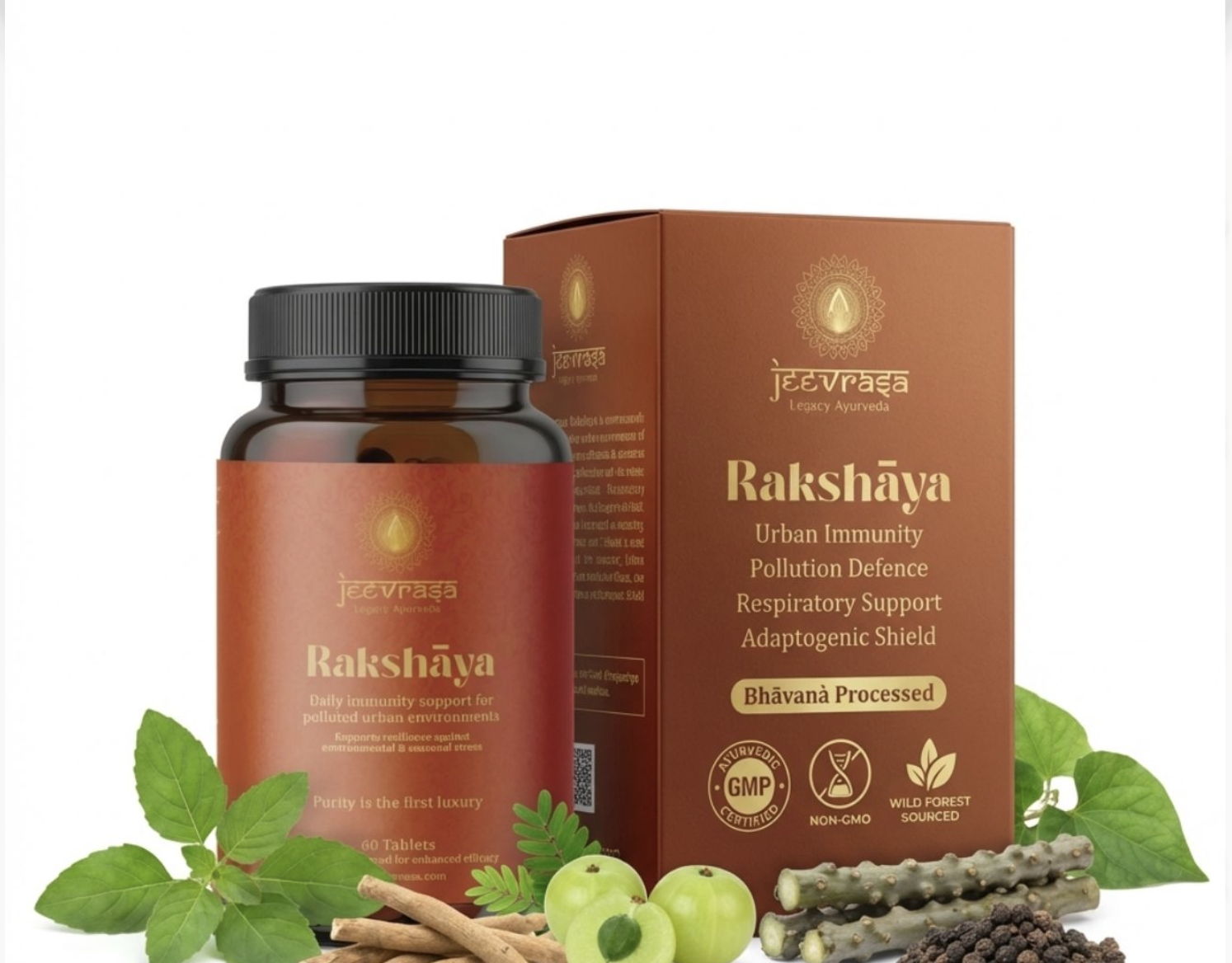
India just allocated ₹4,408 crore to AYUSH. The EU just opened its doors. The global traditional medicine market is real. So why does something still feel unfinished?
By Abhishek Singhh | Founder, Just What Works™ | March 2026
For most of my life, Ayurveda was the bottle of Chyawanprash on the kitchen shelf. The oil my grandmother massaged into my hair on Sunday mornings. The bitter kadha when I had a cold.
It was real. It was ours. But it wasn’t taken seriously outside our homes.
That’s changing. Fast.
A $26.5 Billion Wake-Up Call
The AYUSH sector — Ayurveda, Yoga & Naturopathy, Unani, Siddha, Homoeopathy — is now estimated at $26.5 billionin 2026. That’s not heritage. That’s an industry.
Budget 2026-27 didn’t just increase funding. It made a structural statement.
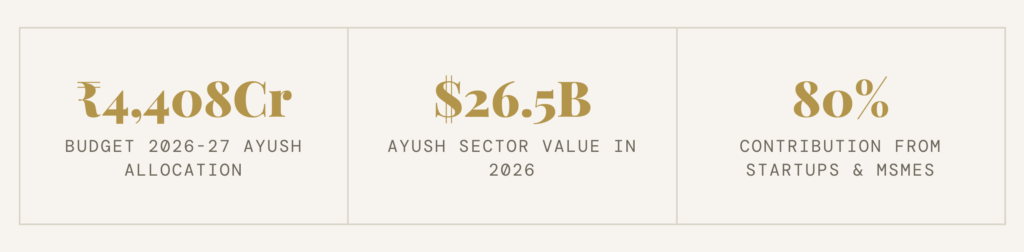
Three new All India Institutes of Ayurveda — envisioned as AIIMS-like centres combining patient care, research, and education. A 66% funding increase for the National AYUSH Mission. Upgradation of the WHO Global Traditional Medicine Centre in Jamnagar. ₹4,408 crore allocated — up from just ₹2,122 crore in 2020-21.
And then the EU door opened.
The India–EU FTA: What It Actually Means
The India-European Union Free Trade Agreement is a bigger deal than most people are discussing in the wellness space.
Here’s what it unlocks practically:
→ Indian AYUSH practitioners can now practice across EU countries using Indian qualifications — in nations without specific traditional medicine regulations.
→ Indian firms can legally establish Ayurvedic clinics and wellness centres across all 27 EU member states.
→ Mutual recognition of lab certifications reduces duplication, cost, and export delays for AYUSH products.
→ India’s Traditional Knowledge Digital Library (TKDL) gets formal recognition — protecting our formulations from biopiracy.
That last point matters enormously. India has spent decades watching its traditional knowledge get extracted, renamed, and patented abroad. The TKDL protection is overdue and significant.
“Ayurveda is no longer just a cultural export. It’s becoming an economic and diplomatic asset. The question is whether we build it with integrity — or just build it fast.”
The Scope Is Real. The Responsibility Is Bigger.
The global shift toward preventive, holistic, and personalised healthcare is genuinely structural — not a trend. Post-pandemic, consumers in Europe, North America, Southeast Asia, and the Gulf are actively seeking alternatives to symptom-suppression medicine.
Ayurveda is sitting at a rare intersection:
→ 5,000+ years of clinical observation — some of which is beginning to find molecular validation in modern research.
→ India as the only country with the biodiversity, traditional knowledge ecosystem, and institutional base to lead.
→ A growing diaspora of 30+ million Indians globally — culturally primed consumers.
→ Yoga’s global normalisation has created a ready-made bridge audience for Ayurveda.
The government’s Bharat-VISTAAR — an AI-based assistant supporting medicinal plant farmers with crop quality, market pricing, and export certification — is the kind of unglamorous infrastructure work that actually moves industries forward. Quiet. Essential. Overlooked in headlines.
The Uncomfortable Truths
I say this not as a critic of Ayurveda. I say it as someone who believes in its potential deeply enough to be honest about its problems.
Scientific validation is incomplete. The Indian Medical Association is right to push back here. Many Ayurvedic therapies lack randomised controlled trials. “It has worked for 5,000 years” is not a substitute for clinical evidence when you’re asking a German regulatory body to approve a product. The evidence gap is real and needs to be closed — not dismissed.
Safety issues are not small. Reports of heavy metals — lead, mercury — in some formulations have triggered international health advisories. One bad actor with one contaminated product can set an entire category back years. Standardisation isn’t bureaucracy. It’s the price of global credibility.
The mixopathy debate is messy. Surgical training for Ayurveda postgraduates. Prescription of allopathic medicines. Boundary blurring. This creates genuine patient safety risks and needs sharper, cleaner regulatory lines — not political compromise.
Because the supplement and wellness industry globally is already drowning in hype. The last thing Ayurveda needs is to join that race.
What This Means If You’re Building in This Space
The policy environment in 2026 is the most favourable it has ever been for Ayurveda-backed products and businesses. The budget signal is clear. The international access is real.
But the brands and builders who will matter in a decade are not the ones who ride the wave fastest.
They’re the ones who insist on:
→ Formulation integrity that holds up to global regulatory scrutiny — not just domestic compliance.
→ Evidence-backed claims. Not “ancient wisdom” as a substitute for science. Both, not either.
→ Supply chain transparency — from the medicinal plant farmer to the finished product.
→ Subtraction, not addition. Ayurveda’s real genius was always precision — the right herb, the right dose, the right context. Not 42 ingredients in one capsule.
At Just What Works™, this is the philosophy we’re building molecule by molecule. Not because it’s easier. Because it’s the only way to build something that survives scrutiny — at home and abroad.
The Bottom Line
Ayurveda is having its global moment. The economics are real. The policy support is the strongest it has ever been. The international doors are opening.
But global access without global standards is just noise at scale.
The path forward is not tradition versus science. It’s tradition through science. Heritage with evidence. Ancient wisdom with modern accountability.
India has the knowledge. We have the biodiversity. We have the institutional base.
What we build with it — that’s still our choice.
Science over Hype. Only what works.
FAQ
What is the scope of Ayurveda in India in 2026?
The AYUSH sector is estimated at $26.5 billion in 2026. Budget 2026-27 allocated ₹4,408 crore — up from ₹2,122 crore in 2020-21. Three new All India Institutes of Ayurveda are being established, and the National AYUSH Mission received a 66% funding increase. Startups and MSMEs contribute nearly 80% of sector value.
What is the scope of Ayurveda abroad — particularly in Europe?
The India-EU Free Trade Agreement now allows Indian AYUSH practitioners to practice across EU countries using Indian qualifications. Indian firms can establish Ayurvedic clinics across all 27 EU member states. Mutual recognition of lab certifications and India’s TKDL protection reduce barriers for AYUSH product exports to Europe.
What are the biggest challenges facing Ayurveda’s global expansion?
Three primary challenges: scientific validation gaps, safety concerns around heavy metals in some formulations, and regulatory clarity around the blurring of Ayurveda and modern medicine practice. Global credibility demands higher evidence standards — not just larger budgets.
Is Ayurveda scientifically validated?
Partially. Some formulations have emerging clinical research support. Many areas remain under-researched. The Indian Medical Association has raised concerns about inadequate randomised controlled trials. Parts of the system have real scientific merit — but that gap needs honest acknowledgment, not marketing spin.
How large is the global Ayurveda and traditional medicine market?
The AYUSH sector alone is valued at $26.5 billion in India in 2026. Post-pandemic consumer shifts toward preventive, holistic healthcare have accelerated demand across Europe, North America, Southeast Asia, and the Gulf — creating real international growth opportunity for evidence-backed Ayurvedic products and practitioners.
Abhishek Singhh Founder & CEO — Just What Works™ | Elara Biosciences Pvt. Ltd.

Abhishek Singh is the founder of Just What Works and a passionate entrepreneur in the nutraceutical space. Through his brand and writing, he shares practical business strategies, wellness insights, and real-world lessons from his own startup journey. His work helps readers cut through noise and focus on building businesses — and lives — that truly work.