By Abhishek Singhh | May 2025 | 9 min read
Here is a fact that surprises most people when they hear it for the first time.
A product can carry full AYUSH approval and still have no meaningful connection to classical Ayurveda.
Not because the brand is doing anything illegal. Not because AYUSH certification is meaningless. But because what AYUSH certifies and what classical Ayurveda actually requires are two different things — and almost nobody explains the difference clearly.
This article does that. No agenda, no critique of the regulatory system. Just a clear explanation of what each term means, where the gap is, and what to look for if you want a product that is genuinely classically Ayurvedic rather than simply compliant.
What AYUSH certification actually covers
AYUSH approval — whether a manufacturing licence or the voluntary AYUSH Standard or Premium Mark — is primarily a manufacturing and safety compliance signal. It confirms three things:
- The manufacturer follows Good Manufacturing Practices (GMP) under Schedule T of the Drugs and Cosmetics Act
- The ingredients used are permitted under one of the 103 authoritative texts listed in Schedule I of the Drugs and Cosmetics Act
- The product meets basic safety screening requirements — heavy metals, microbial contamination, moisture content
This is genuinely useful. These are not trivial standards. A product with AYUSH approval has cleared a regulatory bar that many do not.
But what it does not confirm is equally important to understand.
AYUSH certification does not confirm that a product follows a classical formula from a Samhita text. It does not confirm that the herbs used were sourced from their natural forest habitat rather than a commercial farm. It does not confirm that classical processing methods — like Bhāvanā — were used. And it does not confirm that the product’s formulation intent is rooted in classical Ayurvedic philosophy rather than a modern proprietary interpretation.
A brand can meet every AYUSH requirement while doing none of those things.
The distinction AYUSH itself draws — but most consumers never see
Under the Drugs and Cosmetics Act, Ayurvedic products are divided into two distinct categories. This is legal and regulatory fact, not interpretation.
Classical (Shastriya) medicines
These are formulations described exactly in one of the authoritative classical texts — the Charaka Samhita, Sushruta Samhita, Ashtanga Hridaya, Bhaishajya Ratnavali, Sarangdhara Samhita, and others. The formula, the ingredient proportions, the processing method, and often the sourcing specifications are defined by the text itself. The manufacturer’s role is faithful execution, not creative formulation. Triphala Churna, Chyavanprash, Dhanwantharam Thailam — these are classical formulations. The recipe is thousands of years old and unchanged.
Proprietary (Patent) Ayurvedic medicines
These use ingredients permitted by the classical texts but follow a formula created by the manufacturer. The combination, the ratios, and the processing approach are the manufacturer’s own design — not lifted from any classical text. Both categories require AYUSH licensing. Both can carry an AYUSH mark. On a retail shelf, they look identical.
This is the gap most consumers never see. When a label says “AYUSH Approved Formula,” it tells you the product cleared regulatory compliance. It does not tell you which of these two categories the product belongs to — or how faithfully it honours the classical system it claims to represent.
What classical Ayurveda actually demands — beyond the ingredient list
Classical Ayurveda is not a list of herbs. It is a complete system with specific requirements at every stage — sourcing, processing, and formulation — that most modern production cannot or does not replicate.
Sourcing: where the herb comes from matters as much as which herb it is
Classical texts do not simply name ingredients. They specify habitat, growth stage, season of harvest, and method of collection. The Charaka Samhita and Ashtanga Hridaya both describe how the same herb grown in different conditions — altitude, soil type, forest canopy, proximity to other plants — carries different therapeutic properties.
A herb growing wild in its natural forest ecosystem, accumulating phytochemicals slowly under the conditions the classical formula was designed around, is not the same as the same species grown on a commercial farm for volume and consistency. Both will pass AYUSH ingredient compliance. Only one reflects classical intent.
Ayurveda
Without The Noise.
JeevRasa is not trend-driven wellness. It is slow-made, Bhāvana-processed Ayurveda built with honesty, purity, and deep respect for classical preparation methods. No gimmicks. No exaggerated claims. Just thoughtfully crafted formulations designed for modern life.
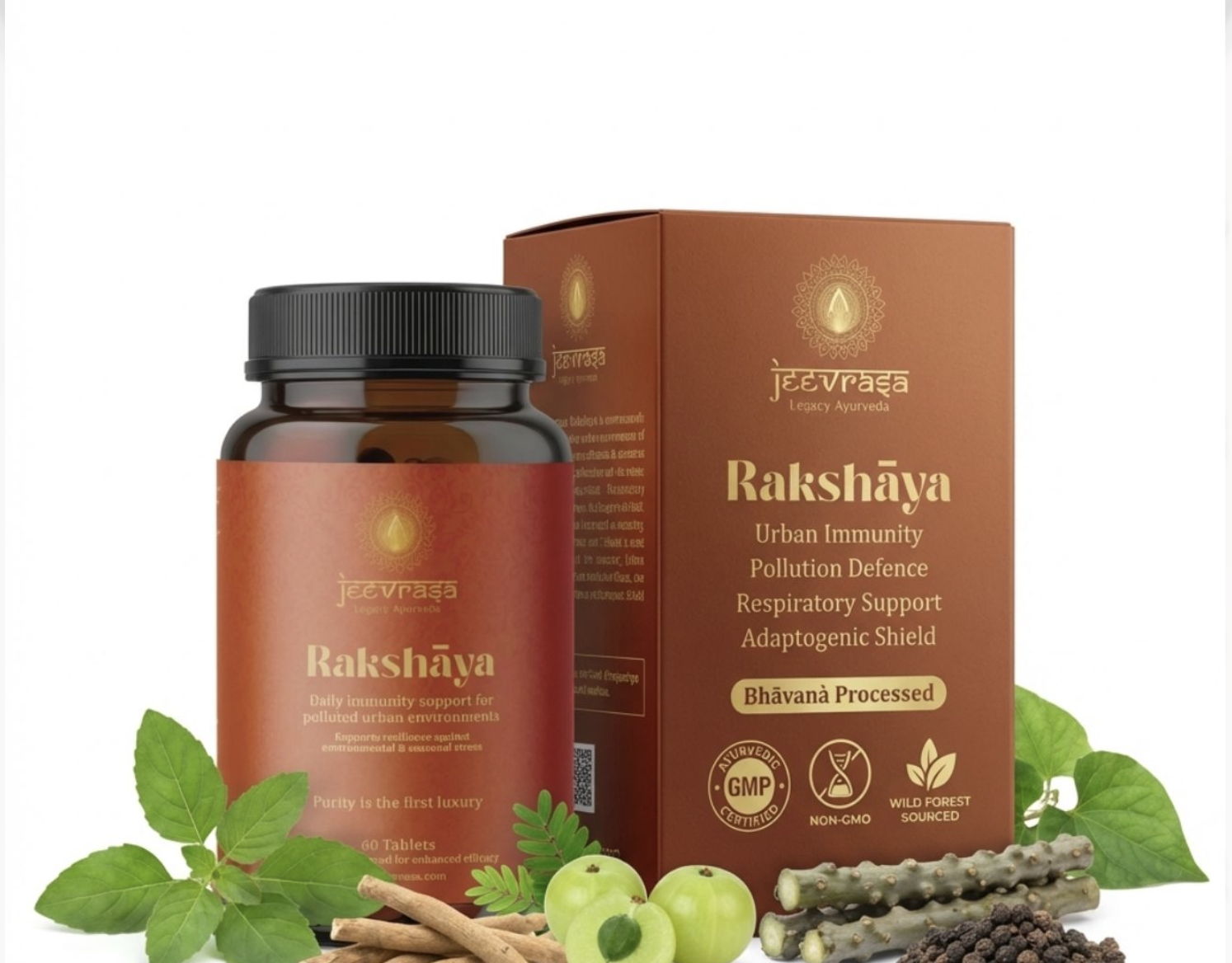
Bhāvanā processing: the step most commercial products skip
The process involves taking dried herbal powder and repeatedly triturating it with a specific liquid medium — typically a fresh juice, decoction, or extract prescribed by the classical text for that formula. This is done across multiple cycles, sometimes over several days, until the material reaches a specific consistency described in the text.
The purpose is not aesthetic. Bhāvanā is understood in classical Ayurveda to enhance bioavailability, potentiate the active compounds of the herb, and ensure that the ingredient’s therapeutic properties are fully expressed in the finished formulation. The liquid medium used is not arbitrary — it is selected because of its specific interaction with the herb being processed.
This takes time. It requires specific knowledge of which liquid medium to use for which herb. It cannot be replicated by mixing dry powders with a binding agent and pressing them into tablets. Most commercially produced Ayurvedic products — including many with full AYUSH approval — do not use Bhāvanā processing at all.
Samhita roots: the formula should be traceable to a text
A classically rooted Ayurvedic product can tell you exactly which text its formula comes from. The Charaka Samhita. The Sushruta Samhita. The Ashtanga Hridaya. The Sarangdhara Samhita. These are not just names dropped for credibility — they are the source documents. If a brand cannot tell you which classical compendium its formula references, or if it uses phrases like “inspired by ancient wisdom” without a specific textual citation, the formulation is likely proprietary rather than classical.
A comparison: what each signal actually tells you
| Signal on the Label | What It Confirms | What It Does Not Confirm |
|---|---|---|
| AYUSH Approved / AYUSH Licensed | GMP compliance, permitted ingredients, basic safety screening | Classical formula, Bhāvanā processing, wild sourcing, Samhita reference |
| “Ayurvedic” on the label | Uses ingredients permitted under Ayurvedic texts | Classical formulation, processing depth, sourcing standard, or textual authenticity |
| Named classical formula (e.g. Triphala, Chyavanprash) | Formula exists in classical texts | That the classical processing method and sourcing specifications were followed |
| Bhāvanā processing disclosed | A classical processing step was used — the herb was triturated with a specific liquid medium | Which liquid medium, how many cycles, and whether the classical text’s specification was followed |
| Wild / forest sourced herbs disclosed with origin | Herbs came from natural habitat rather than commercial farming | Season of harvest, collection method, or whether classical sourcing specifications were met |
| Samhita reference cited (specific text named) | Formula is traceable to a classical authoritative text | That every processing and sourcing detail of the classical prescription was followed |
Why this matters practically
The classical Ayurvedic system was built around the complete chain — right herb, right habitat, right harvest timing, right processing, right formulation. Each link in that chain was specified because classical practitioners understood that therapeutic outcome depends on all of them together, not just the ingredient list.
A product that uses the right herbs but sources them from commercial farms is working with different raw material than the classical formula assumed. A product that uses the right herbs from the right source but skips Bhāvanā processing is delivering a less potentiated formulation than the classical text intended. A product that follows a proprietary formulation — however intelligently designed — is not the same as one rooted in thousands of years of clinical refinement documented in a Samhita.
None of this is captured by AYUSH certification alone. The certification confirms that a product is safe, compliant, and made from permitted ingredients. Those are the floor, not the ceiling.
What to look for beyond the AYUSH mark
Three questions, in order:
1. Does the formula reference a specific classical text?
Not “inspired by classical Ayurveda.” A named text. A named formulation within that text. If the brand cannot provide this, the formula is proprietary — which may still be a good product, but it is not a classical Ayurvedic one.
2. Does the brand disclose its processing method?
Specifically: is Bhāvanā processing used, for which ingredients, and with which liquid medium? A brand that uses Bhāvanā should be able to describe it specifically. “Traditional processing methods” without detail is marketing language, not a processing disclosure.
3. Does the brand disclose its herb sourcing?
Not just “natural” or “herbal” or “sustainably sourced” — where specifically, wild or farmed, and if wild, from which region. Herbs sourced from their natural high-altitude or forest habitat carry a different phytochemical profile than farmed equivalents. A brand confident in its sourcing will say so clearly.
These three questions separate a classically grounded Ayurvedic product from a compliant but superficial one. Ask them. The answer — or the absence of one — tells you everything.
A note on how JeevRasa approaches this
JeevRasa was built around the gap this article describes.
Every formula is Samhita-rooted — traceable to a specific classical text, not a proprietary combination assembled for market appeal. Bhāvanā processing is used and disclosed specifically: which herbs, which liquid medium, how many trituration cycles. Herb sourcing is wild and forest-sourced, documented by origin — not “natural” as a marketing adjective but as a sourcing standard with traceability behind it.
These are not things AYUSH requires. They are things classical Ayurveda demands — and things that most brands, compliant as they may be, have found easier to skip than to execute.
The AYUSH mark on a JeevRasa product tells you the floor has been met. The sourcing, processing, and textual grounding tell you where the brand actually lives.
Purity is the first luxury. Everything else follows from that.
Frequently asked questions
What does AYUSH certification actually mean?
AYUSH certification confirms that a brand complies with the Drugs and Cosmetics Act, follows GMP standards under Schedule T, and uses ingredients permitted in authoritative Ayurvedic texts. It is a manufacturing and safety compliance signal. It does not confirm classical processing methods, Bhāvanā-processed ingredients, or wild forest herb sourcing.
What is the difference between a classical Ayurvedic medicine and a proprietary Ayurvedic medicine?
A classical Ayurvedic medicine follows a formula described exactly in one of the 103 authoritative texts listed in Schedule I of the Drugs and Cosmetics Act — the Charaka Samhita, Sushruta Samhita, Ashtanga Hridaya, and others. The formula, ratios, and processing method are defined by the text. A proprietary Ayurvedic medicine uses permitted ingredients but follows a formula created by the manufacturer. Both can carry AYUSH approval. Both look identical on a shelf.
What is Bhāvanā processing in Ayurveda?
Bhāvanā is a classical processing method in which dried herbal powders are repeatedly triturated with a specific liquid medium — fresh herbal juice, decoction, or extract — as prescribed by the classical text. This is repeated across multiple cycles until the material reaches a defined consistency. It enhances bioavailability and potentiates the active compounds. It is time-consuming, requires specific knowledge, and cannot be replicated by simply mixing dry powders. Most commercially produced Ayurvedic products skip it entirely.
Why does wild or forest sourcing of herbs matter in Ayurveda?
Classical Ayurvedic texts specify not just which herb to use but where it should come from, at what growth stage, and during which season. Herbs grown in their natural forest habitat accumulate different concentrations of active phytochemicals compared to commercially farmed equivalents. Wild-sourced herbs reflect what the classical formulas were originally designed around. Farmed substitutes may meet AYUSH ingredient compliance without meeting the classical sourcing intent.
Can an Ayurvedic product be AYUSH-approved and still not be classically Ayurvedic?
Yes. AYUSH approval covers both classical and proprietary Ayurvedic formulations. A product can be legally AYUSH-approved while using commercially farmed herbs, skipping Bhāvanā processing, and following a manufacturer-created proprietary formula rather than a Samhita-rooted classical one. The certification confirms regulatory compliance. It does not confirm classical authenticity, processing depth, or sourcing standards.
What should a buyer look for beyond AYUSH certification?
Three things: whether the formula references a specific classical text by name, whether the brand discloses its processing method specifically (particularly Bhāvanā), and whether herb sourcing is disclosed with origin detail — wild or farmed, and from which region. These three disclosures separate a classically grounded Ayurvedic product from a compliant but superficial one.
JeevRasa is an Ayurvedic supplement brand by JeevRasa Legacy Ayurveda Company., built around Samhita-rooted formulas, Bhāvanā processing, and wild forest-sourced herbs. Every formula is traceable. Every processing step is disclosed. JeevRasa believes that “Purity is the first luxury”.
-
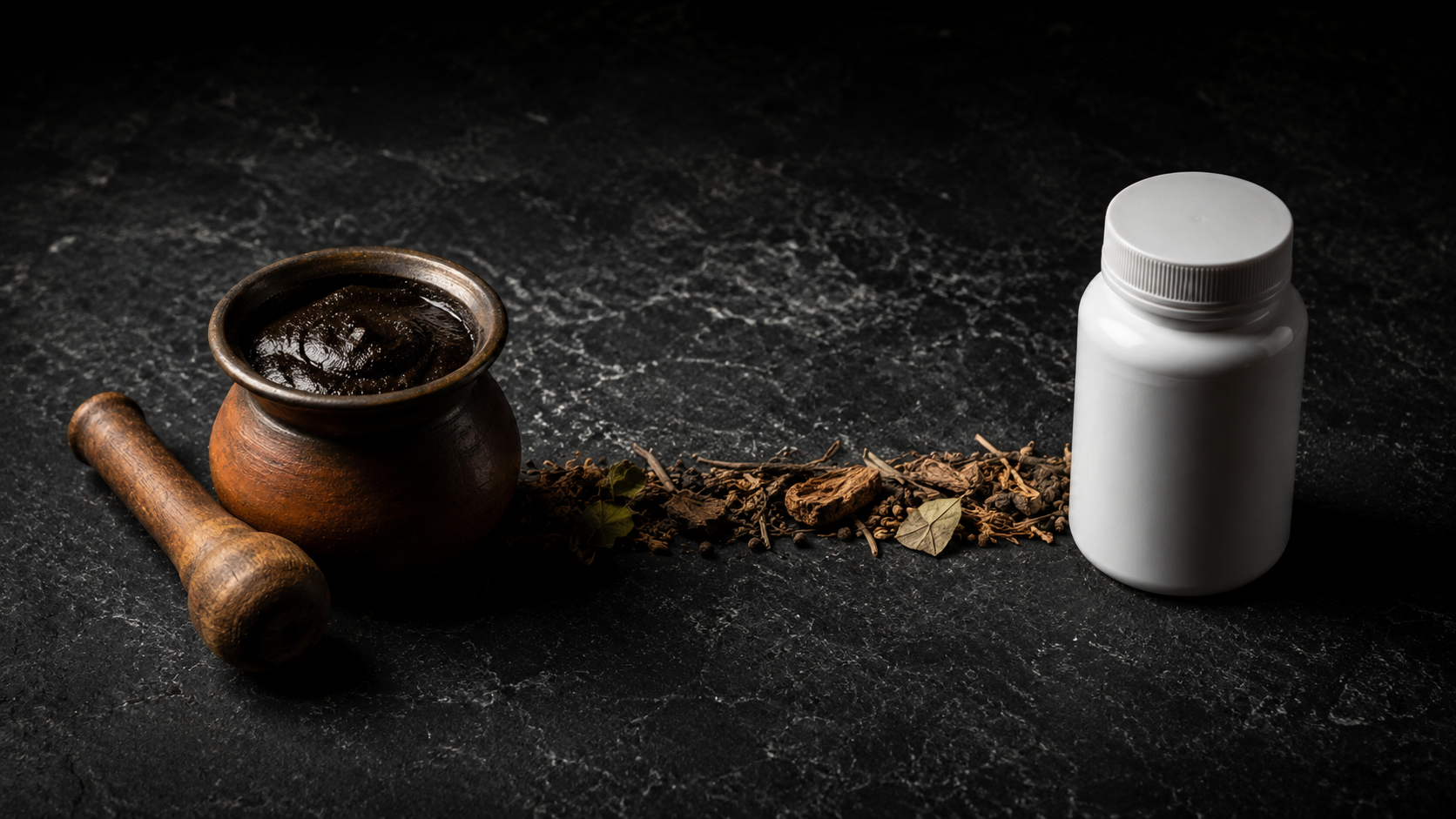
The difference between classical Ayurveda and what AYUSH certifies
As seen on ANI ASIAN NEWS INTERNATIONAL ANI News THE PRINT The Print THE Tribune The Tribune MSN MSN O OUTLOOK BUSINESS Outlook Business NEWS X News X dh Daily Hunt Daily Hunt THE DAILY GUARDIAN Daily Guardian By Abhishek Singhh | May 2025 | 9 min read Here is a fact that surprises most people…

Abhishek Singh is the founder of Just What Works and a passionate entrepreneur in the nutraceutical space. Through his brand and writing, he shares practical business strategies, wellness insights, and real-world lessons from his own startup journey. His work helps readers cut through noise and focus on building businesses — and lives — that truly work.