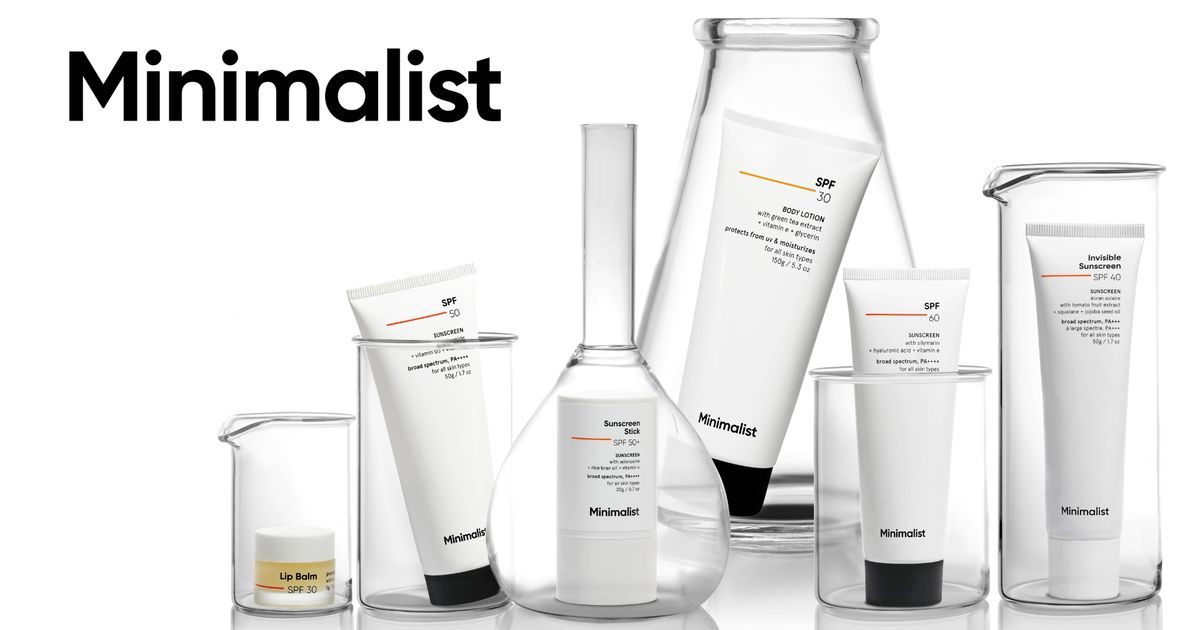
Minimalist didn’t “get lucky.”
They executed with clarity, discipline, and an obsession for truth in a category drowning in noise.
Here’s the real learning if you’re building a brand in beauty, wellness, or D2C.
1. They Built a Business, Not a Hype Balloon
Minimalist launched during COVID — when the world was locked in — and still hit:
- ₹100 crore revenue in 5 years
- ₹3,000 crore valuation
- With zero celebrity face
- And zero marketing theatrics
They began with six serums — all engineered to solve specific, painful skin problems (acne, pigmentation, dullness).
Lesson:
Start small.
Solve hard problems.
Let the product talk.
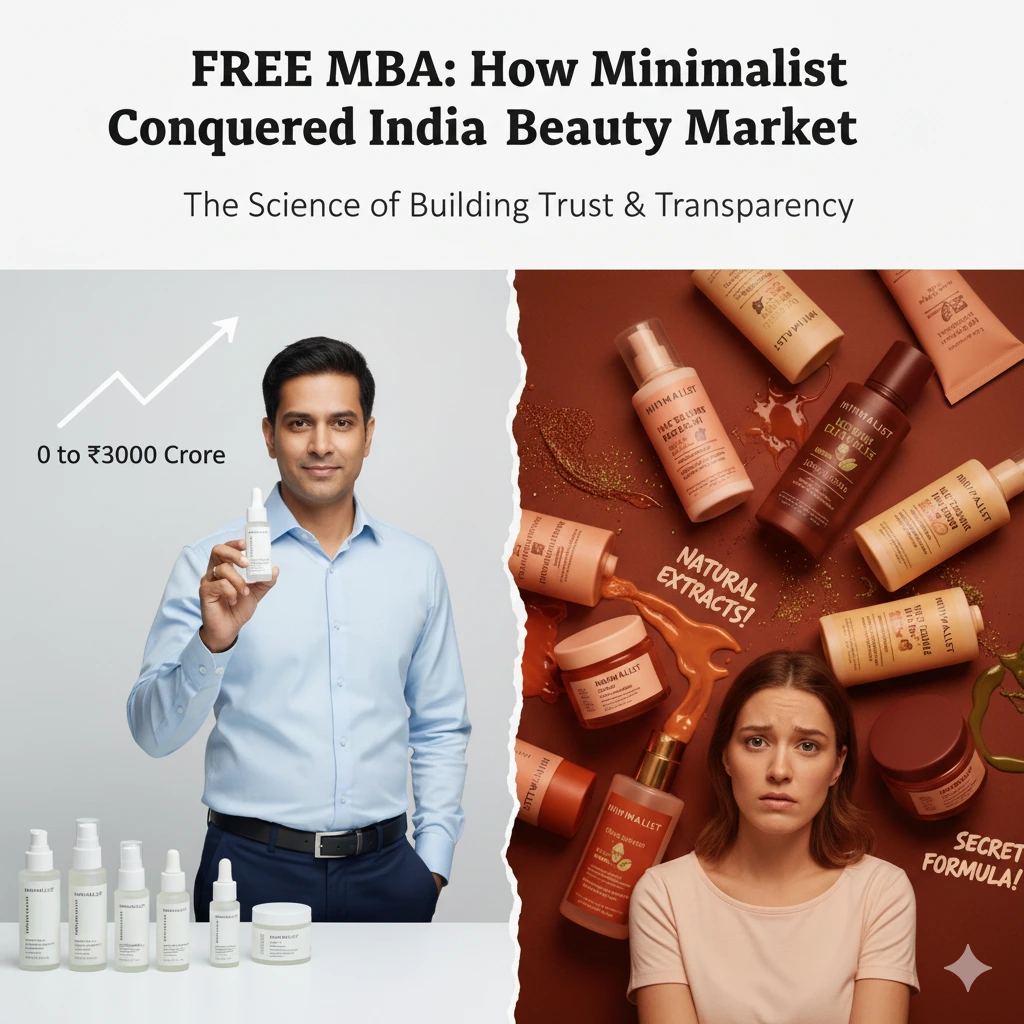
2. Their Communication Was So Clear… It Felt Radical
Minimalist avoided the fluffy language that dominates skincare.
No “miracle glow.”
No “Ayurvedic magic.”
No “ancient secrets.”
They spoke like scientists:
- Active ingredients
- Concentrations
- Skin mechanisms
- Expected timelines
- Real results
Their content educated customers, not confused them.
This created trust — the most expensive currency in beauty — without burning cash.
Lesson:
Clarity scales faster than hype.
Educated customers never leave you.
3. UGC Became Their Real Marketing Engine
They didn’t chase influencers.
They didn’t pay for noisy campaigns.
Instead, early users became evangelists.
People posted honest progress photos.
Reviews stacked.
Communities debated ingredients.
Word-of-mouth exploded.
UGC became their “free marketing department.”
Lesson:
If the product works, customers do your marketing for you.
If the product doesn’t work, no marketing can save you.
4. Their Unit Economics Were Built to Last
Minimalist ran a tight, founder-conscious P&L:
- 70% gross margins
- 30% COGS
- Smart pricing — high value, not cheap gimmicks
- Marketing spend lower than industry norms
They spent more on formulation quality than on “branding drama.”
Because the product worked, their repeat purchase rate remained strong — and that’s where profitability lives.
Lesson:
Unit economics decide who survives, not virality.
Great formulations → loyalty → profits.
5. They Faced Attacks — And Still Didn’t Bend
Competitors targeted them.
Rumors. Whisper campaigns. Paid takedowns.
But Minimalist kept moving with:
- Transparency
- Clinical data
- Community backing
- Category expertise
In beauty, perception battles are brutal.
But truth always outlives manipulation.
Lesson:
If your foundation is strong, no competitor can shake you.
If your foundation is weak, even a whisper can break you.
6. They Stayed Gender-Neutral — Smart, Strategic, Scalable
While rivals chased “men’s grooming” or “women’s fairness,”
Minimalist built universal skincare.
Skin is skin.
Problems are problems.
Gendering it is a marketing trap.
By staying inclusive, they unlocked:
- Larger TAM
- Simpler messaging
- Stronger science-first perception
Lesson:
If the category’s science doesn’t differ by gender, your product shouldn’t either.
7. They Built for Tomorrow’s Consumer
The Indian skincare buyer is changing fast:
- More educated
- Ingredient-aware
- Research-driven
- Results-oriented
Minimalist aligned perfectly with this shift.
And they’re doubling down on:
- More problem-specific products
- Stronger clinical validation
- More education-driven content
- A community of informed users
Lesson:
Build for the next generation of consumers, not the last one.
The Final Takeaway
Minimalist won because they respected the consumer.
No shortcuts.
No gimmicks.
No pretending.
They built trust brick by brick — through clarity, consistency, and clean science.
If you’re building a brand in beauty or wellness, learn from this:
People don’t want drama.
They want honesty that works.
Build that, and the market will come to you.

Abhishek Singh is the founder of Just What Works and a passionate entrepreneur in the nutraceutical space. Through his brand and writing, he shares practical business strategies, wellness insights, and real-world lessons from his own startup journey. His work helps readers cut through noise and focus on building businesses — and lives — that truly work.